


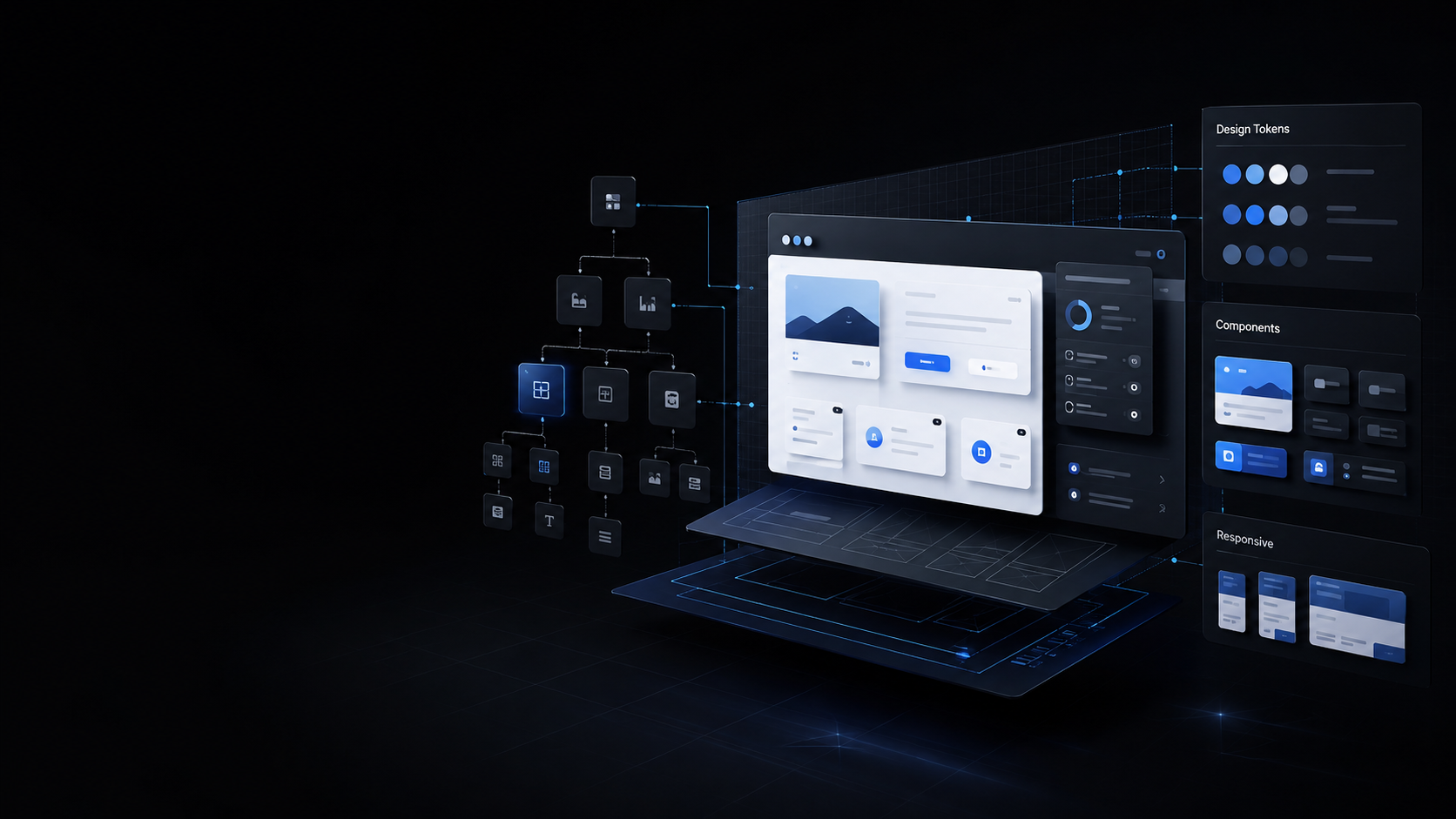
Many websites start as a small collection of pages and gradually become more complex as a business grows. New features, campaigns, content and pages are added over time. Without a strong frontend system, this growth can quickly create inconsistent designs, duplicated code and difficult maintenance.
Scalable frontend architecture provides a structured foundation that allows a website to grow while remaining consistent, efficient and easier to manage.
What Makes a Frontend Scalable?
Scalability is about creating systems that can handle growth without unnecessary complexity.
A scalable frontend is not simply a large codebase. It is an organized system where common patterns, components and design decisions can be reused as the website expands.
Instead of rebuilding the same interface repeatedly, teams can use established patterns that make new pages faster to create and easier to maintain.
Reusable Components
Reusable components reduce duplication and create a consistent foundation for the entire website.
Buttons, cards, navigation systems, forms, content sections and other interface elements can be designed as reusable building blocks.
When a component needs to be improved, the change can be applied consistently instead of manually updating multiple versions across different pages.
Consistency Across the Website
A scalable system helps every page feel like part of the same digital product.
Consistent spacing, typography, colors, buttons and interaction patterns improve usability and strengthen brand recognition.
The goal of a scalable frontend is not to make every page identical. It is to make every design decision intentional and consistent.
Maintainability and Team Collaboration
Well-structured frontend systems make it easier for teams to work together as projects grow.
Clear naming conventions, reusable patterns and organized stylesheets reduce confusion when multiple developers contribute to the same project.
This also makes onboarding easier and reduces the risk of introducing inconsistent solutions for common problems.
Performance and Accessibility
Scalability should improve the quality of the user experience, not only the development process.
A well-planned frontend system can encourage optimized assets, efficient layouts, semantic HTML and accessible interaction patterns.
Performance and accessibility should be considered from the beginning instead of being treated as fixes added at the end of development.
Building for Future Growth
A website should be able to evolve as the business changes.
New services, landing pages, marketing campaigns and digital products may be added over time. A scalable frontend system makes these additions easier to implement without requiring the entire website to be rebuilt.
Planning for future growth helps businesses reduce technical debt and protect the long-term value of their digital platform.
Final Thoughts
Scalable frontend systems are an investment in the future of a website.
A website may begin with only a few pages, but successful businesses often continue adding new content, features and digital experiences over time.
By building a strong frontend foundation from the beginning, teams can create websites that remain consistent, maintainable, accessible and ready to grow.